GEO for Law Firms: Where AI Search Fits Into Your Attorney SEO Strategy
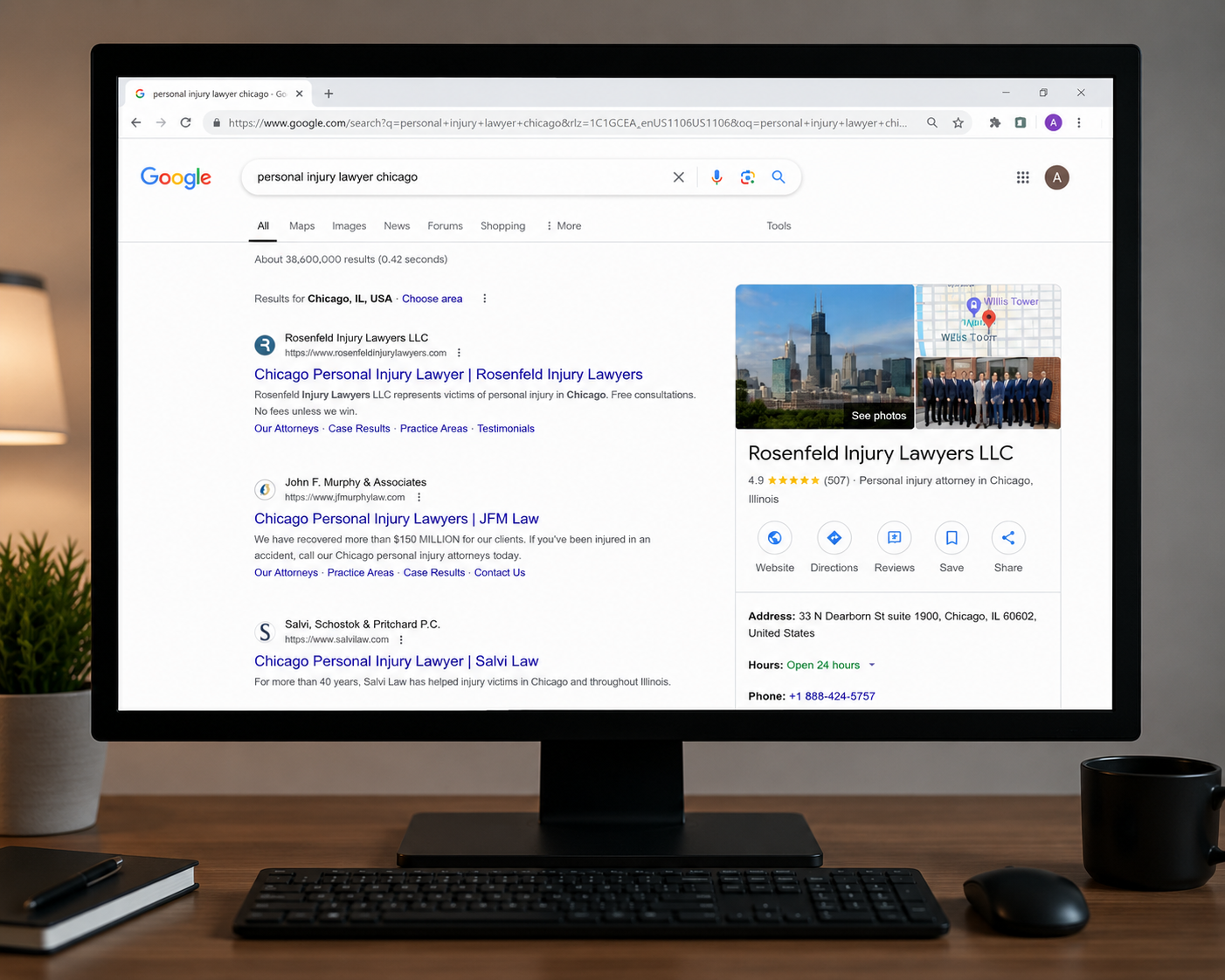
If you run a law firm, you've probably been pitched some version of "If your firm isn't showing up in ChatGPT, you're invisible and you need a whole new strategy to fix it." It's a compelling fear that's selling a lot of services right now.
But there's a calmer truth. AI search is real and worth your attention. But for law firms, Generative Engine Optimization (GEO) isn't a replacement for attorney SEO, it's an extension of it. I provide both and the more work I do across the two, the clearer it becomes that they run on the same engine. Understanding why protects you from overpaying for "AI SEO" as if it were a separate product.
What GEO Actually Is
Generative Engine Optimization is the practice of getting your content cited inside AI-generated answers, that being the AI Overviews at the top of Google, plus ChatGPT, Claude, Perplexity, Gemini etc. Where traditional law firm SEO aims to rank your pages among the first blue links, GEO aims to make your firm the source the AI quotes when it summarizes an answer.
While it sounds like a brand-new discipline, in practice, it's the newest layer of SEO for lawyers and is built on the same foundation.
Where Your Clients Actually Search
Before you reallocate budget, look at where legal clients actually are. Google still delivers roughly 80–90% of all searches and remains dominant for the queries that drive new cases: transactional and local searches like "car accident lawyer near me." AI's real foothold is in research and informational questions - the "how does a contingency fee work" type - not the urgent, ready-to-hire moment.
These tools also complement each other rather than compete. Roughly 95% of people who use ChatGPT still use Google too. For legal in particular, where searches happen during stressful, local, time-sensitive events, traditional search and local listings - like your Google Business Profile, Maps presence, and reviews - still play a predominant role in who gets the first call. GEO matters, but it's the newer slice of a pie that classic attorney SEO still dominates.
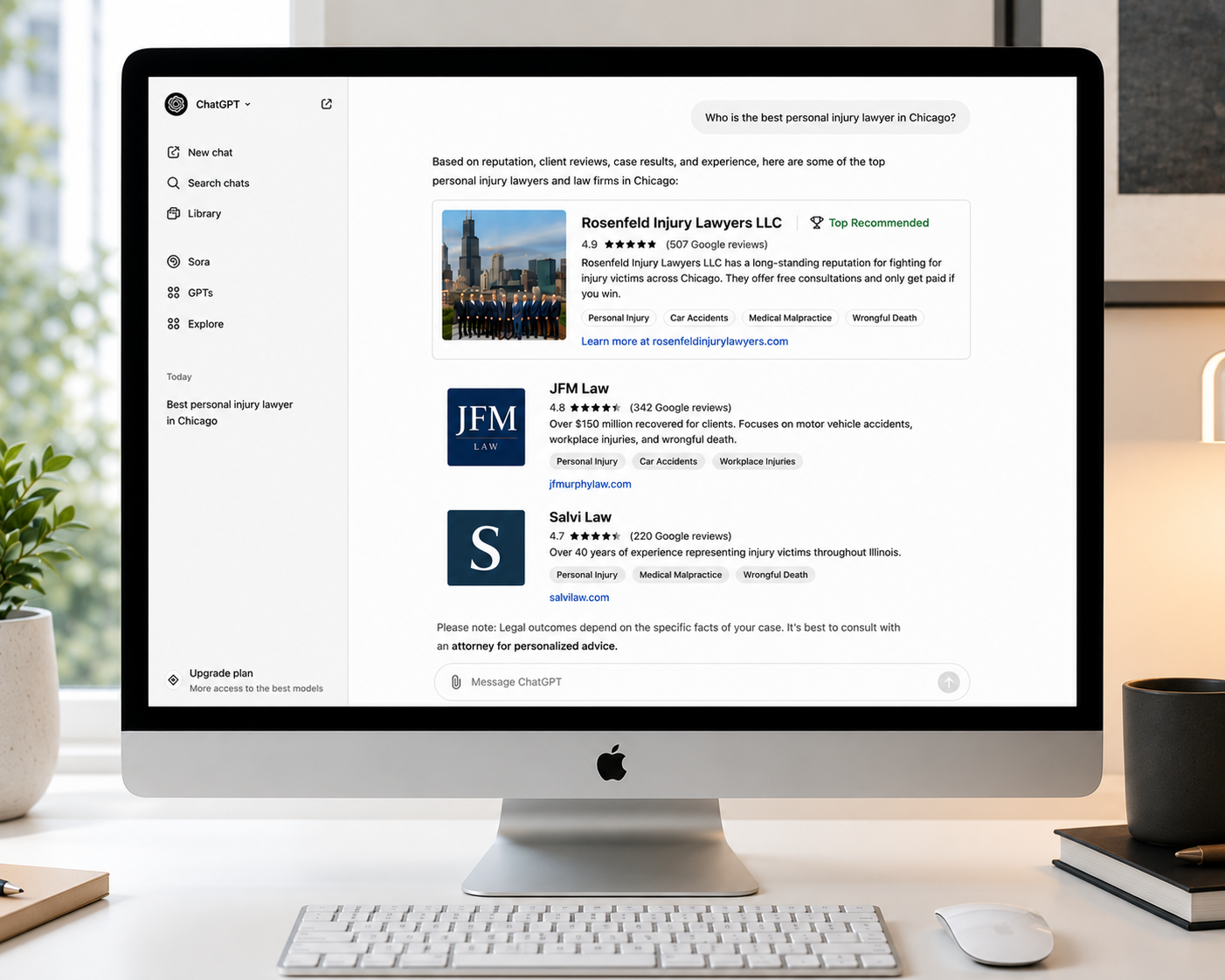
Why GEO and Attorney SEO Share the Same Foundation
The things that earn AI citations are, almost entirely, the same things that earn search rankings: clean structured data (the behind-the-scenes code that tells search engines what a page is about), fast and well-organized pages, genuinely authoritative content, and the kind of earned authority that good legal SEO has always chased. Backlinks and AI citations are two versions of the same thing - other sources deciding you're worth pointing to. One specialist can deliver both, because it's one body of work, not two.
I've seen this firsthand in a market where the result is easy to isolate. I took a single local sandwich shop, Fat Sal's, to position one and made it the cited source in Google AI results for high-volume definitional terms - "what is a hoagie" (2,400 searches a month), "what is a deli" (1,000 a month), and more - outranking national references like Merriam-Webster and Wikipedia. A handful of those first position terms equated to well over a thousand visits a month because the top organic result captures by far the largest share of clicks.
For a law firm, that's the same fight in a different arena: a single firm trying to outrank Avvo, FindLaw, and Justia. The dual win matters more than ever because around 58% of U.S. searches now end without a click. When the AI answers right on the page, being the cited source keeps you visible as cited pages earn roughly 120% more clicks for every time they're shown than uncited ones sitting in the same position.
What GEO Actually Adds: Being Easy to Quote, Not New Authority
If GEO and attorney SEO share a foundation, what's genuinely new? Mostly formatting for what you could call extractability - making your content easy to lift. AI engines quote content that's simple to pull out: a clear, direct answer in the first 40–60 words under a heading, concise definitions, clean question-and-answer structure, and well-defined entities (the specific people and things a page is about) - your firm, your attorneys, your practice areas.
The authority half of GEO is the same (displaying expertise in your field) and legal content is unusually well-suited to it. Google treats legal pages as "Your Money or Your Life" content - topics that can affect someone's health, finances, or safety - and demands real expertise and credibility: named attorneys, bar admissions, genuine case experience. Firms that do SEO for lawyers properly are already most of the way to winning AI citations.
The Regulatory Wrinkle Unique to Legal GEO
This is where law firms carry a concern most industries don't and where most GEO guides go quiet. The relevant constraint for GEO is attorney advertising rules, chiefly ABA Model Rule 7.1 and its state equivalents, which prohibit false or misleading communications about your services.
The wrinkle: when an AI engine paraphrases your content into an answer, it can strip out your disclaimers or recombine your claims, yet your firm remains responsible for how its services are represented. So a few things carry extra weight in a GEO context. You can't imply you're a "specialist" or "expert" without certification from an accredited body. Superlatives like "best lawyer" and unsubstantiated comparisons invite trouble. Claims about past results can mislead without proper disclaimers. And the rules vary significantly by state. Florida, for one, is especially strict.
The practical fix is straightforward: keep the claims on your source pages accurate, substantiated, and disclaimer-supported, and have your marketing reviewed against your state's rules. Helpfully, that points the same direction as Google's quality standards - both reward content that doesn't mislead.
How to Prioritize Without Chasing Hype
So where should a firm investing real money put it? Build the attorney SEO foundation first - technical health, authoritative practice-area and local content, a strong Google Business Profile - then layer GEO formatting on top. That sequence captures the channel driving intake calls today while positioning you for the one that's growing. What you shouldn't do is abandon proven law firm SEO to chase an AI-search future that, for legal, is still an addition rather than a replacement.
The firms that pull ahead won't be the ones who treated GEO as a panic purchase. They'll be the ones who recognized it as the next chapter of the same strategy and hired one specialist to handle both.